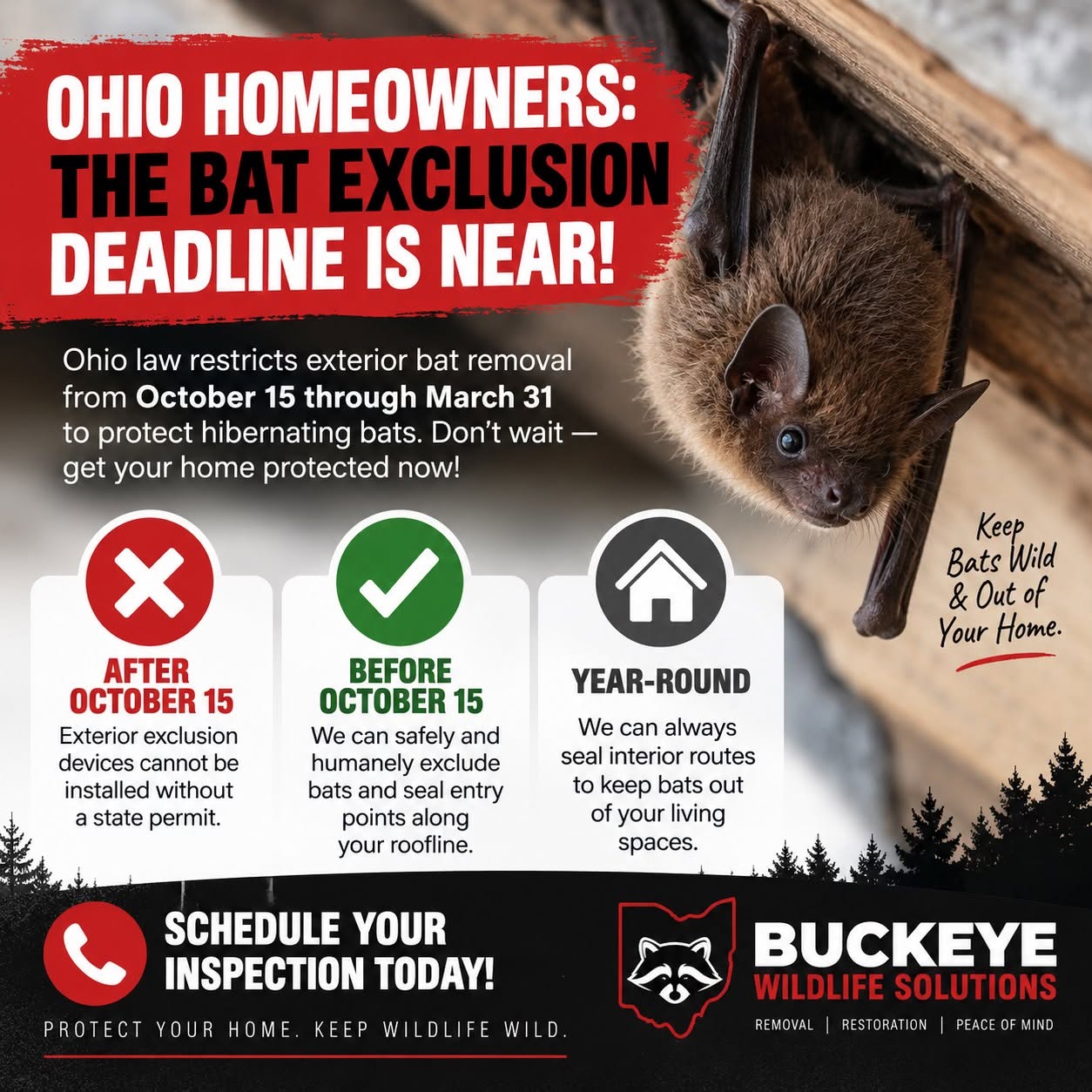
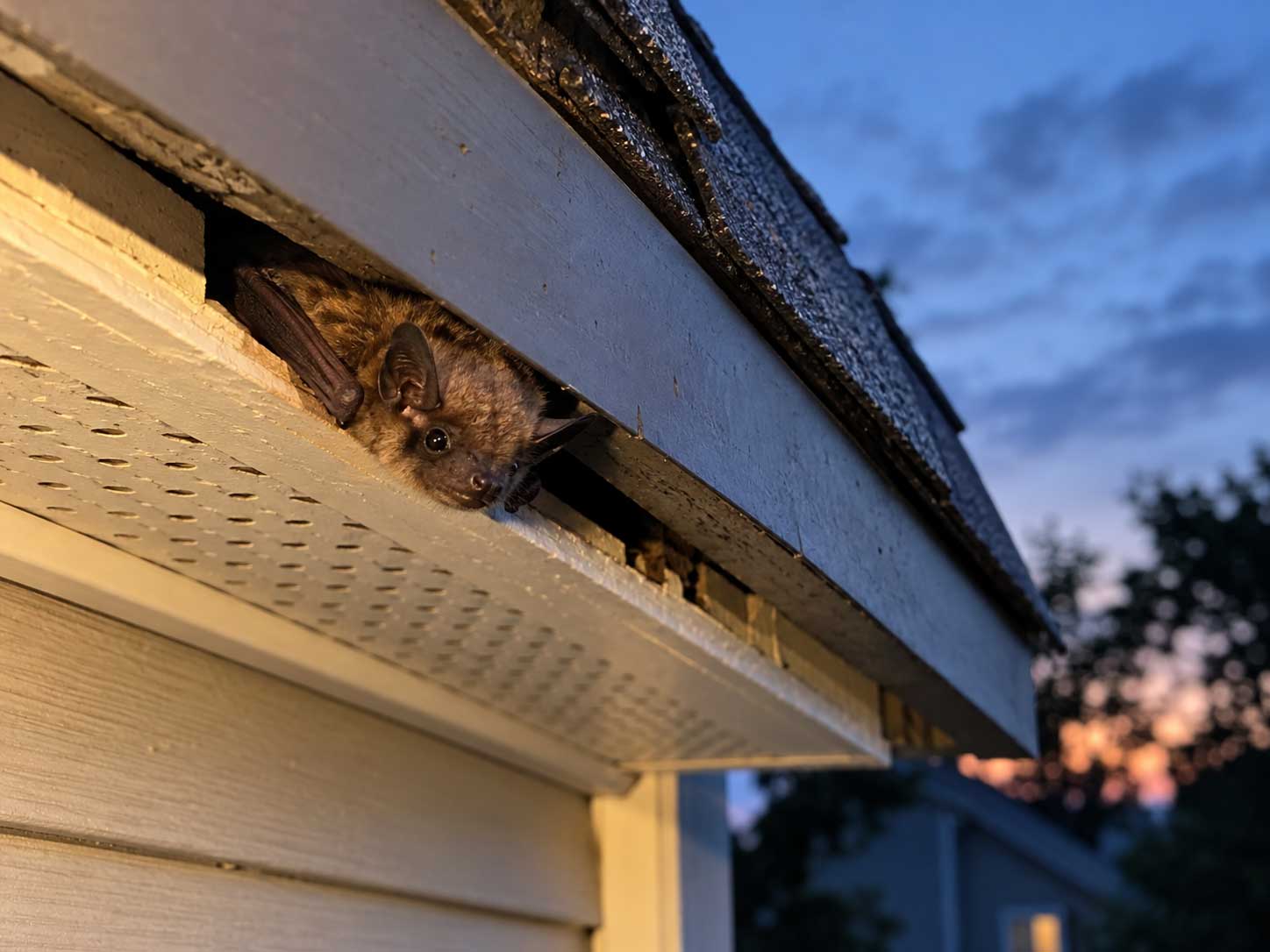
If you have heard scratching in the attic this fall, or watched bats fly out of your roofline at sunset, the calendar matters more than you might think. In Ohio, the window for legally evicting bats from a home closes on October 15. After that date, bats that are still inside are generally protected until spring.
For homeowners in Columbus, Delaware, and across Central Ohio, that leaves only a few days. This guide explains what the deadline means, what happens if you miss it, which exceptions exist, and what you can still do right now.
Why October 15 Matters for Bats in Ohio Homes
The Ohio Department of Natural Resources (ODNR) Division of Wildlife sets the rules for removing bats from buildings. Under Ohio Administrative Code 1501:31-15-03, the only legal way to remove bats from a structure is exclusion. Exclusion means installing one-way devices that let bats leave but not get back in.
ODNR restricts exclusion from October 15 through March 31 whenever any bats are present. This rule protects hibernating bats. A bat forced out of a warm attic in cold weather may not find another place to survive the winter.
These protections exist for a reason. Four of Ohio’s bat species are state-endangered, including the federally endangered Indiana bat and northern long-eared bat. Since white-nose syndrome arrived, Ohio’s bat populations have declined by more than 90 percent. Bats eat enormous numbers of insects, and losing them affects farms, gardens, and backyards across the state.
Ohio’s Bat Exclusion Calendar, Explained
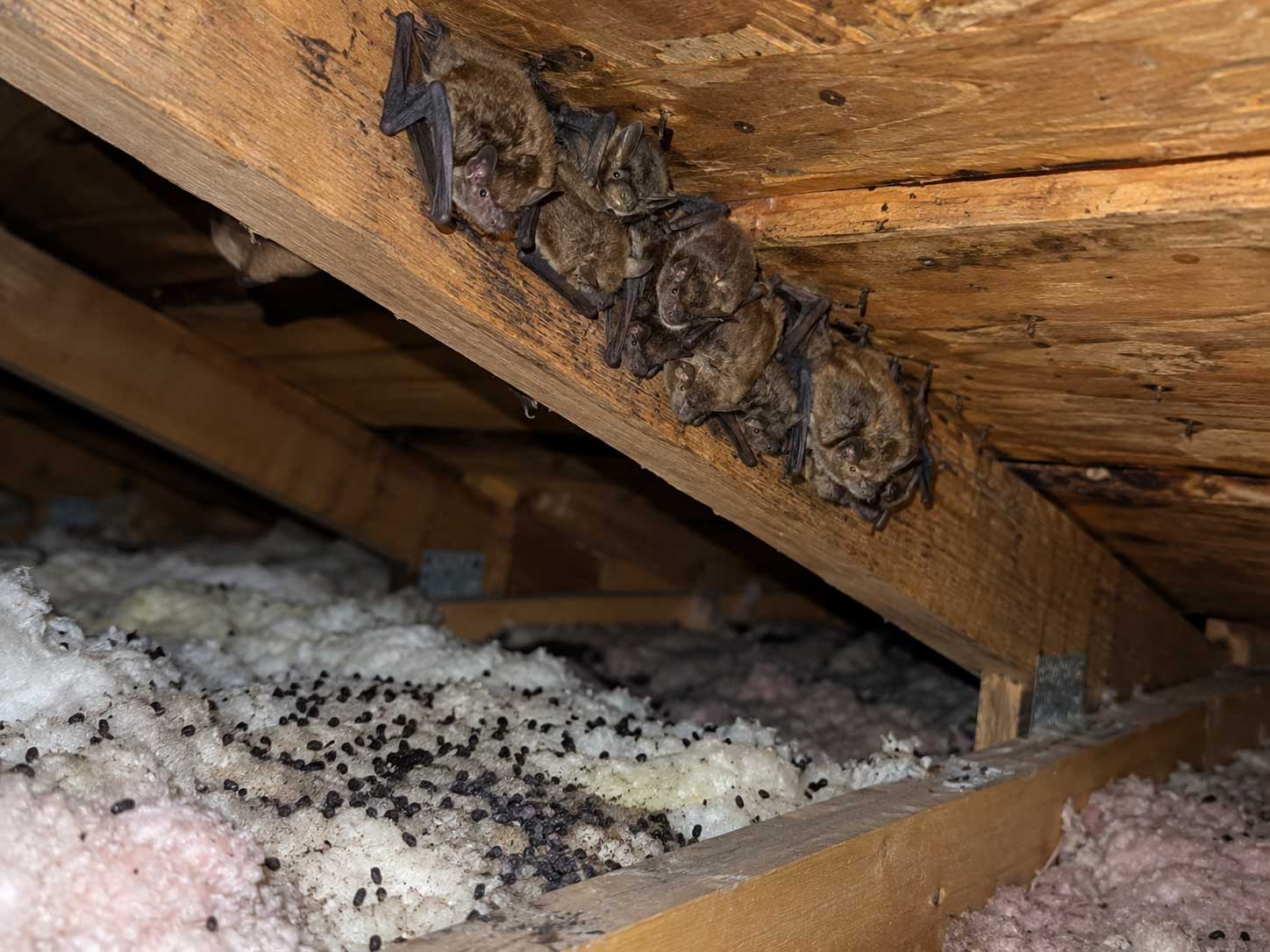
Ohio has two restricted periods for bat exclusion. The first runs from May 16 through July 31. During that time, exclusion is restricted when five or more bats are present, because mothers are raising flightless pups. The second runs from October 15 through March 31 and applies if any bats are present, because bats are settling in to hibernate.
That leaves two ideal windows each year. The spring window runs from April 1 to May 15, before pups are born. The late-summer and fall window runs from August 1 to October 15, after the young can fly and before hibernation.
For most Central Ohio homeowners, the fall window is the most practical. Pups born in early summer are flying by August, and the whole colony can be safely moved out. Once October 15 passes, that opportunity is usually gone until April.
What Happens If You Miss the Deadline?
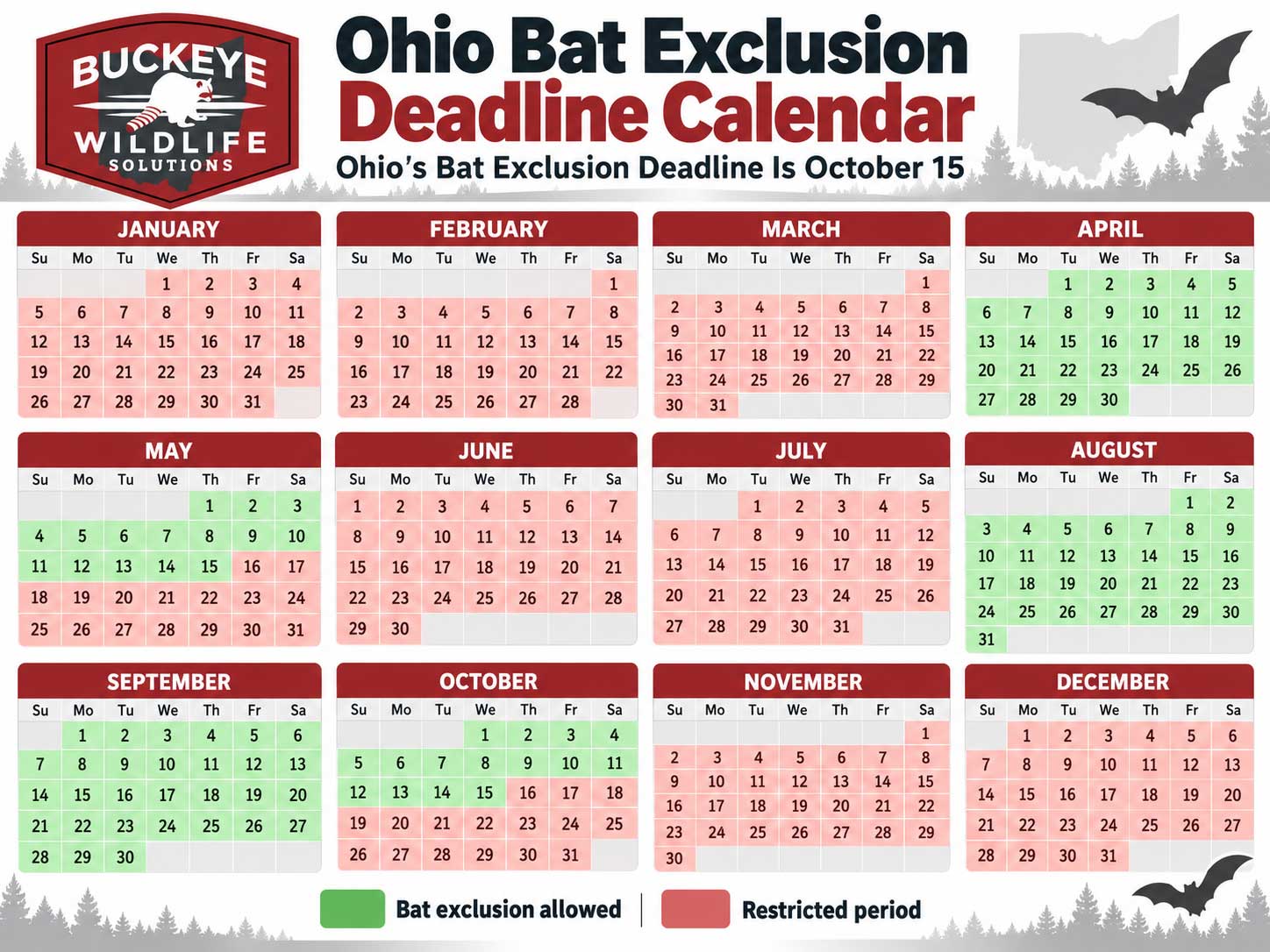
If bats are still in your attic or walls after October 15, a professional generally cannot install exclusion devices on your home’s exterior until spring without written permission from ODNR. In practical terms, many homeowners end up sharing their house with a colony through the winter.
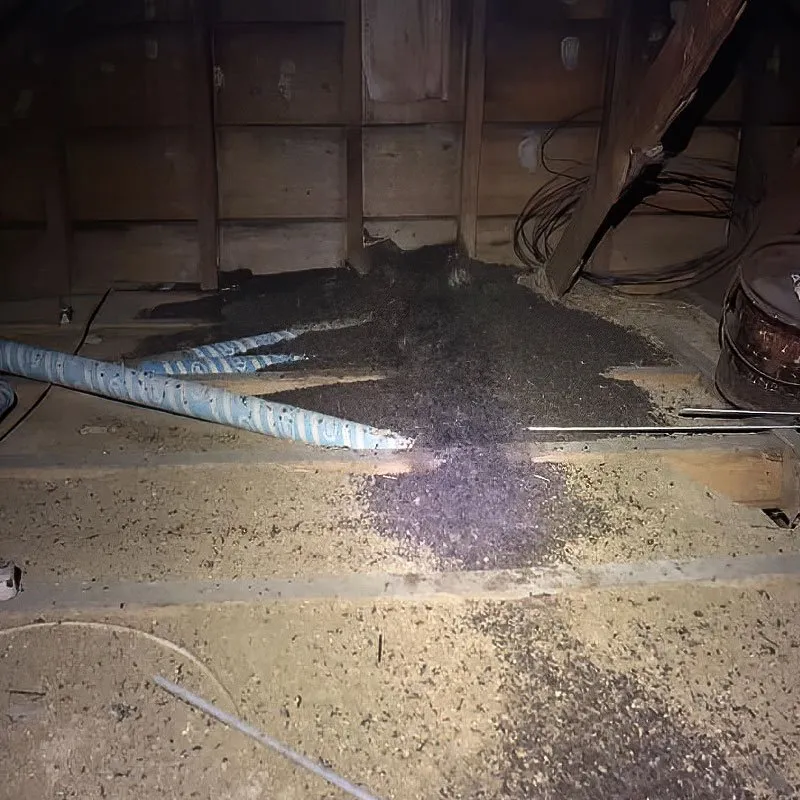
That can mean several months of problems. Guano and urine keep piling up on insulation, drywall, and ceiling joists. Odors can get worse as droppings build up. Big brown bats, the species we find most often in Central Ohio homes, sometimes hibernate inside walls and attics. On a warm winter day they may wake up, get confused, and turn up in a hallway, bedroom, or basement.
The health risks continue as well. Bat droppings can grow the fungus that causes histoplasmosis, a respiratory illness that spreads when dry guano is disturbed and the spores become airborne. You can read more in our post on histoplasmosis in bat guano.
Missing the deadline is not a disaster, but it does delay the fix and give the damage more time to grow.
Can Bats Be Removed After October 15? The Exceptions
There are limited exceptions. ODNR will consider written authorization during a restricted period when human health and safety are at risk. During the October restricted dates, ODNR will also consider authorization when nighttime temperatures stay above 40°F for the full 10-day forecast. Warm nights mean bats can still fly and find new shelter safely.
This fall, the temperature exception may come up more than usual. As we explained in our Ohio Winter 2026–27 Forecast, forecasters expect a strong El Niño, which often brings a milder start to winter. Even so, authorization is never guaranteed. It must be requested and approved before the work begins, and ODNR typically answers within a few days and no later than ten.
One more option is available all year. If bats are getting from the attic into your living space, interior gaps such as an attic hatch or a gap around a light fixture can be sealed at any time without a permit. Sealing the outside of the house while bats are inside, however, is illegal.
Why Columbus Homes Attract Bats
Columbus offers bats everything they need. The Scioto and Olentangy rivers, Alum Creek, and Hoover Reservoir provide huge insect hatches every summer. Mature tree canopies in neighborhoods like Clintonville, Bexley, Upper Arlington, and Worthington give bats cover as they travel between water and roost.
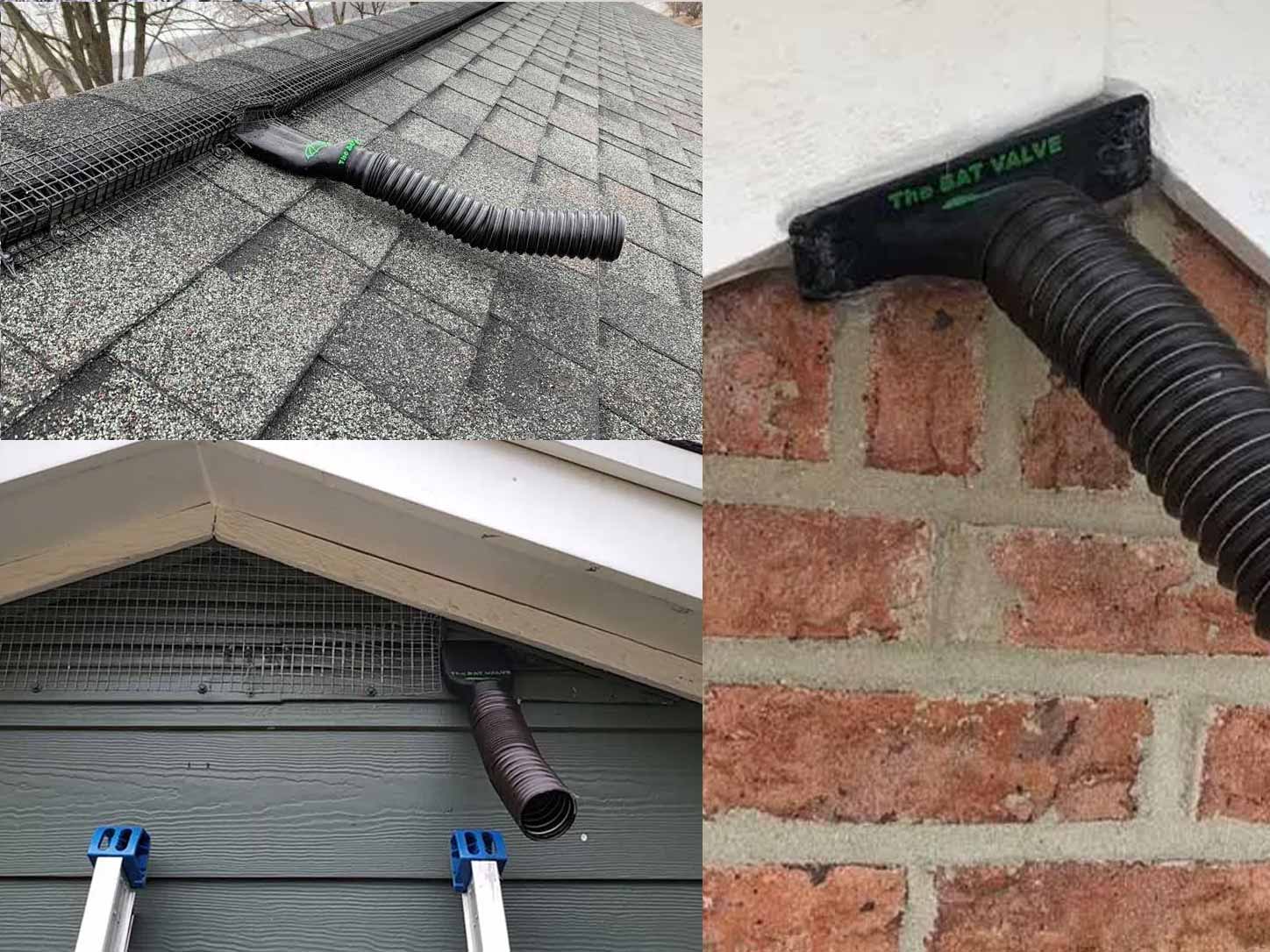
The homes themselves are often the deciding factor. Older brick homes in German Village and Victorian Village tend to have loose mortar, aging wood trim, and gaps where additions meet the original structure. A bat needs an opening only about 3/8 of an inch wide, roughly the width of a pencil. Gaps around chimneys, gable vents, fascia boards, and ridge vents are common entry points.
Newer homes are not immune either. In suburbs like Dublin, Hilliard, and Westerville, we regularly find bats entering through ridge vents and gaps at the corners of soffits. These are construction details that many homeowners never think to check.

Bats in Delaware and Delaware County Homes
Delaware County is one of the busiest areas we serve for bat calls, and our home base in Lewis Center keeps us close. The Olentangy River runs right through the city of Delaware, and Alum Creek State Park, Delaware State Park, and Highbanks Metro Park surround the area with prime bat habitat.
In the city of Delaware, many of the historic homes near downtown and Ohio Wesleyan University have the same issues as older Columbus homes: original woodwork, slate or older roofs, and chimneys that have shifted over time. Farther out, the fast-growing neighborhoods of Powell, Lewis Center, Sunbury, and Galena are full of newer construction. Those homes are close to woods and water, which often draws bat colonies to their rooflines within a few years of being built.
We have handled many Delaware bat removal calls over the years, and you can read about how we respond in our post on Delaware, Ohio bat removal.
Signs You Have Bats in Your Attic Right Now
Bats are easy to miss because they are quiet and come and go at night. The most reliable sign is watching your home at dusk. If you see bats leaving from the roofline, gable vents, or chimney in the first half hour after sunset, you almost certainly have a colony.
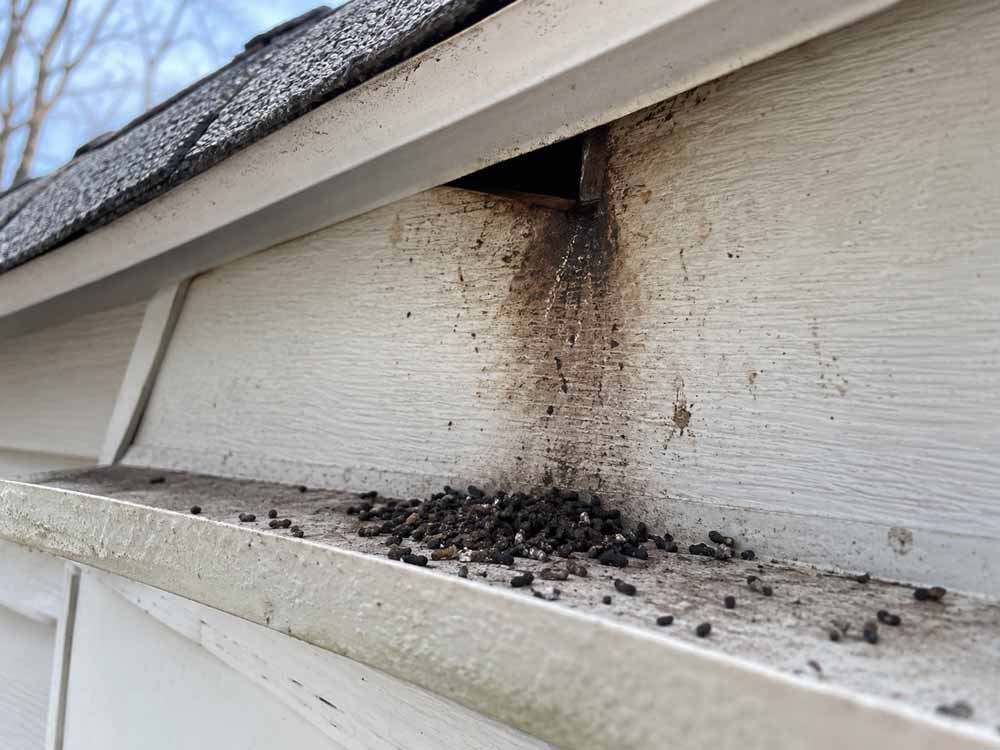
Other clues are easy to spot once you know them. Guano looks like mouse droppings, but it crumbles into a shiny, glittery powder because it is made of insect parts. Look for droppings piled on window sills, on decks, or along the foundation below an entry point. Dark, greasy smudge marks around a gap in the siding or trim come from the oils on bats’ fur. Inside, you might hear faint scratching or chirping in the walls or ceiling around dusk and dawn, or notice a sharp ammonia smell in the attic.
If you notice any of these signs this week, call right away. A quick inspection can tell us whether exclusion can still be done before the deadline.
What Not to Do If You Find Bats This Fall
It is tempting to grab a can of spray foam and seal the hole yourself, but that is one of the worst things you can do. Sealing exterior openings while bats are inside traps them in your home. Trapped bats often die in the walls, which causes odors, or find their way into your living space looking for a way out. Ohio law prohibits sealing entry points while bats are inside.
ODNR also prohibits glue traps, poisons, chemicals, and foggers for bats, and killing bats is illegal unless a bite or possible rabies exposure has occurred. Ultrasonic devices and mothballs are not effective and do not replace a proper exclusion.
There is also a licensing issue. In Ohio, it is illegal for anyone who is not a licensed commercial nuisance wild animal control operator to be paid for wildlife control work, including bat exclusion. Before hiring anyone, confirm that they hold that license.
What to Do If a Bat Gets Into Your Living Space
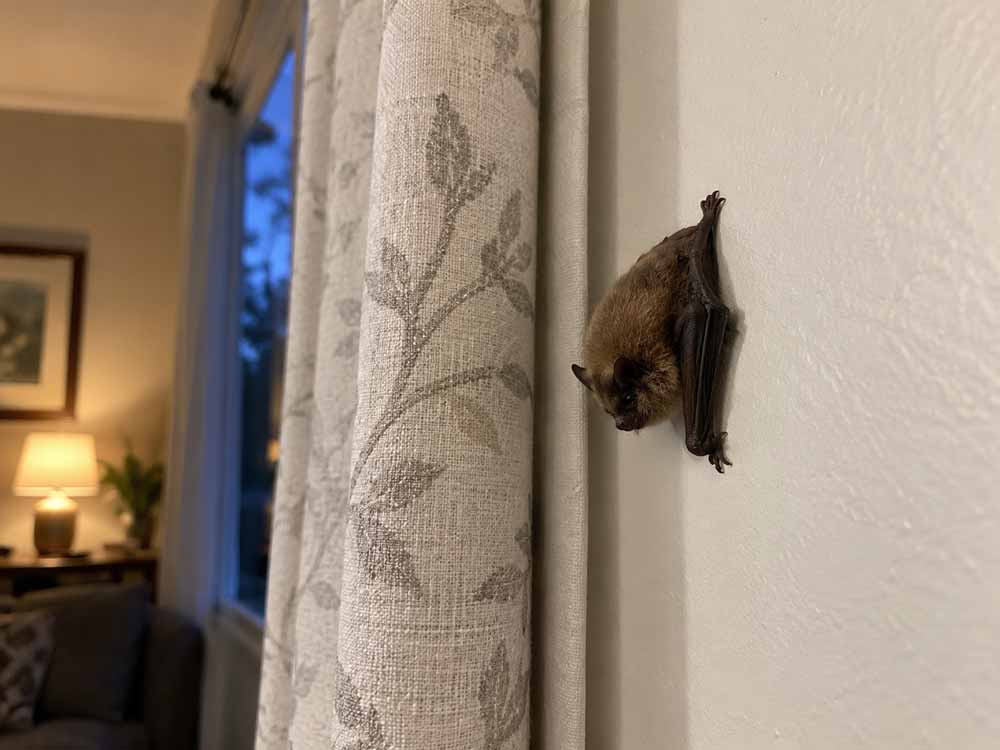
As the weather cools, we get more calls about bats in bedrooms, living rooms, and basements. Stay calm, keep pets and children out of the room, and never handle a bat with bare hands.
Rabies is the main concern. Bat bites can be very small and are not always noticed. If someone may have been bitten or has woken up with a bat in the room, call your doctor. The bat may need to be tested, so do not release it until you get guidance. Follow the instructions of the Ohio Department of Health or your local health department, such as Columbus Public Health or the Delaware Public Health District, for submitting the bat for testing.
If no one could have been bitten, close the room off and call us. We can safely remove the bat and inspect the house to find out how it got in.
How Professional Bat Exclusion Works
Every job starts with a thorough inspection of the roofline, attic, and exterior, looking for both active entry points and the smaller gaps bats could use later. Next, we install one-way exclusion devices over the active entry points and seal the secondary gaps. ODNR requires those devices to stay in place for at least a week. Once the bats have left, we remove the devices and seal the openings the same day.
After the bats are out, attic restoration follows. Our team removes contaminated insulation, sanitizes the area, and installs fresh insulation. Buckeye Wildlife Solutions follows NWCP Bat Standards and is a member of the National Wildlife Control Operators Association, so your home is handled legally, safely, and humanely. Learn more on our attic restoration page.
Planning Ahead: Using the Winter to Prepare for Spring
If the window closes before your bats can be excluded, the winter still does not have to be wasted. Inspections can happen at any time of year. A winter inspection lets us map every entry point and plan the exclusion. You can then be first on the schedule when the spring window opens on April 1, before mothers return to raise their pups.
This is especially useful for homes in Columbus and Delaware County, where demand for exclusions jumps every spring. Planning ahead means less time with bats in your home and less damage to repair once they are out.
Call Buckeye Wildlife Solutions Before the Window Closes
October 15 is days away. If you have seen bats around your home in Columbus, Delaware, Powell, Lewis Center, Westerville, or anywhere in Central Ohio, now is the time to act. Our licensed team can inspect your home, tell you whether an exclusion can still happen this season, and help you plan for spring if it cannot.
Call Buckeye Wildlife Solutions at (844) 544-9453, text us at (419) 982-5502, or request a quote online. We will help you get the bats out the right way and keep them out for good.