
It usually starts after the house goes quiet. You are lying in bed, the furnace clicks off, and then you hear it: a faint scratching inside the wall, a patter across the ceiling, or a thump overhead that makes you sit straight up.
You are not imagining it, and you are not alone. Every fall and winter, homeowners across Columbus, Delaware, and the rest of Central Ohio call us about mysterious sounds in their walls and attics. The good news is that the noise itself tells you a lot. When you hear it, how loud it is, and where it seems to come from can usually narrow the suspect down to mice, rats, squirrels, or raccoons before anyone climbs a ladder.
This guide walks through what each animal sounds like, the other clues to look for, and what to do next.
Why the Noises Get Louder in November
Ohio animals do not leave for the winter. Mice and rats stay active all season, gray squirrels never hibernate, and raccoons only slow down during the coldest stretches. As overnight temperatures drop, they all look for the same thing you do: a warm, dry shelter close to food.
Your attic, wall voids, and crawl space are ideal. Insulation is perfect nesting material, and the heat rising from your living space keeps those areas comfortable. We explain how fast a few mice can turn into a real problem in our post on winter mouse infestations in Ohio.

Start With the Clock: When You Hear It Tells You a Lot
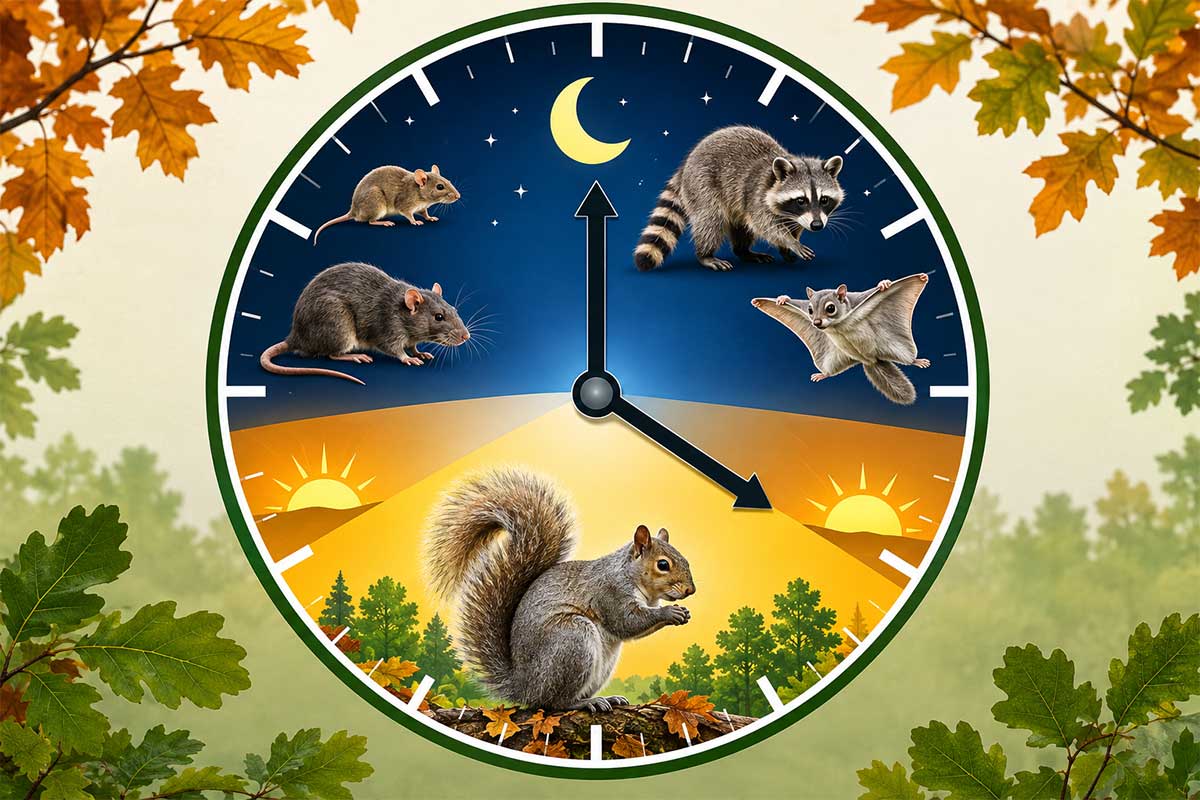
The single most useful clue is the time of day. Animals keep fairly regular schedules, and your ears can pick up on the pattern within a few nights.
If the noise happens mostly at night, after dark and through the early morning hours, you are most likely dealing with mice, rats, raccoons, or flying squirrels. All of them are nocturnal. If the noise happens mainly at dawn and again in the late afternoon, with quiet in the middle of the night, gray squirrels are the prime suspect. They leave in the morning to forage and come back in the evening to settle in.
It helps to keep a simple log for a few days. Write down the time, the location, and a few words about the sound. That record is useful to you and to our technicians.
Mice: Light, Fast Scratching Inside the Walls
Mice make the quietest sounds of the four, which is exactly why they are so easy to dismiss at first. Listen for light, quick scratching and scurrying, often moving up and down inside a wall rather than across the ceiling. You may also hear soft squeaks or faint gnawing, especially near kitchens, bathrooms, and other spots where pipes and wires pass through the walls.
The sound tends to start and stop quickly, and it often moves around the house. Mice travel along the same routes every night, so you may hear the noise in the same few places again and again. A mouse can squeeze through a gap about the size of a dime, so even a well-kept home can have several entry points.
To learn more, read our post on mice in the house in Columbus and our rodent removal page.
Rats: Heavier Gnawing and Scurrying Low in the House
Rats sound like mice turned up a notch. Their footsteps are heavier, the scratching is louder, and their gnawing can be loud enough to hear across a room. In Ohio, the rat we see most often is the Norway rat. Norway rats burrow and tend to stay low in a house, so their noises usually come from the basement, crawl space, lower walls, or under the floors rather than the attic.
Rat gnawing is a serious warning sign. Rodent teeth never stop growing, so rats chew constantly, including on wood, plastic pipes, and electrical wiring. If you hear steady, rhythmic chewing from a lower wall, call for an inspection soon. Our post on rodents in your home during winter covers why rat activity tends to rise in cold weather.
Gray Squirrels: Daytime Racket in the Attic
Gray squirrels are the noisiest daytime intruders. Listen for running, scampering, and scratching across the ceiling, mostly in the attic rather than inside the walls. Many homeowners describe a sound like something small being rolled across the floor. That is often a squirrel moving nuts or other food it has stored.
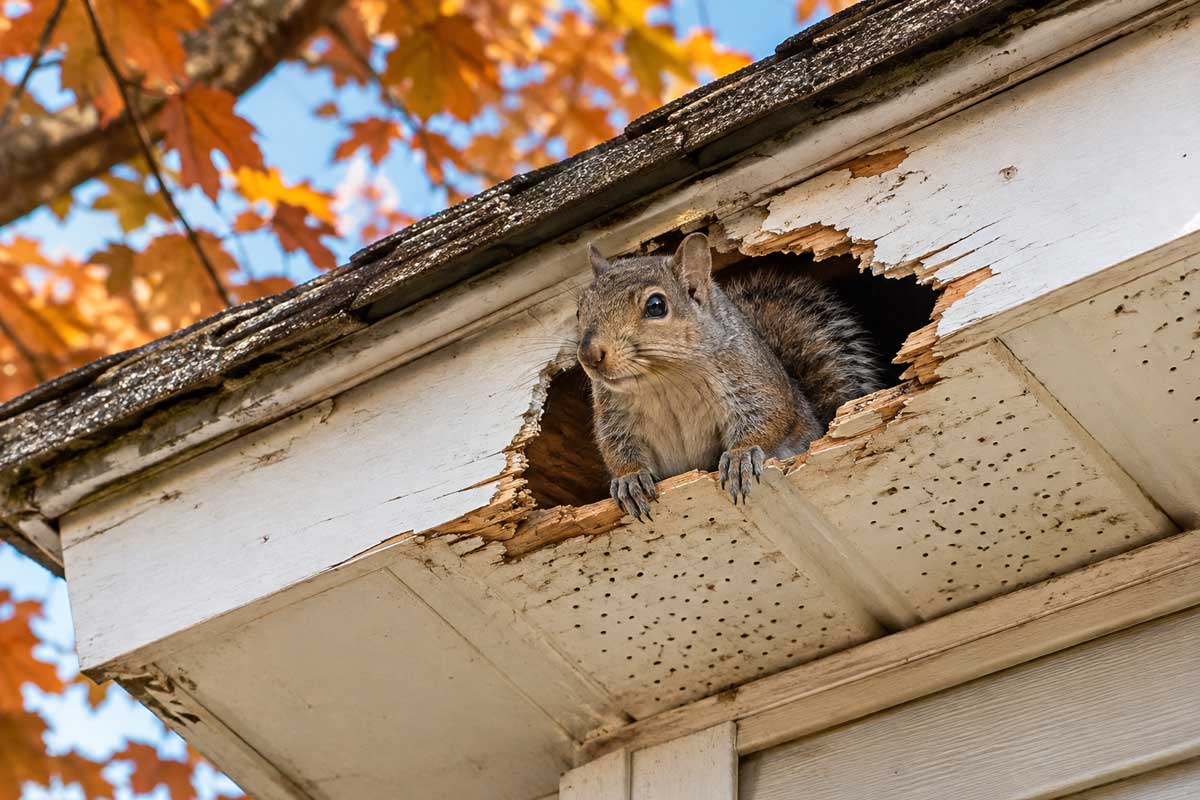
The timing is the giveaway. Gray squirrels are active right after sunrise and again in the late afternoon, then quiet at night. You may also hear chewing at the roofline, since squirrels gnaw around dormers, gable vents, and fascia boards to widen their entry holes.
Squirrels breed twice a year in Ohio, with the first litters arriving in late winter. A squirrel that moves in now may be raising young in your attic by February. Learn more in our posts on squirrels in the attic during winter and squirrel removal in Columbus.
Flying Squirrels: The Nighttime Squirrel Most Homeowners Never See
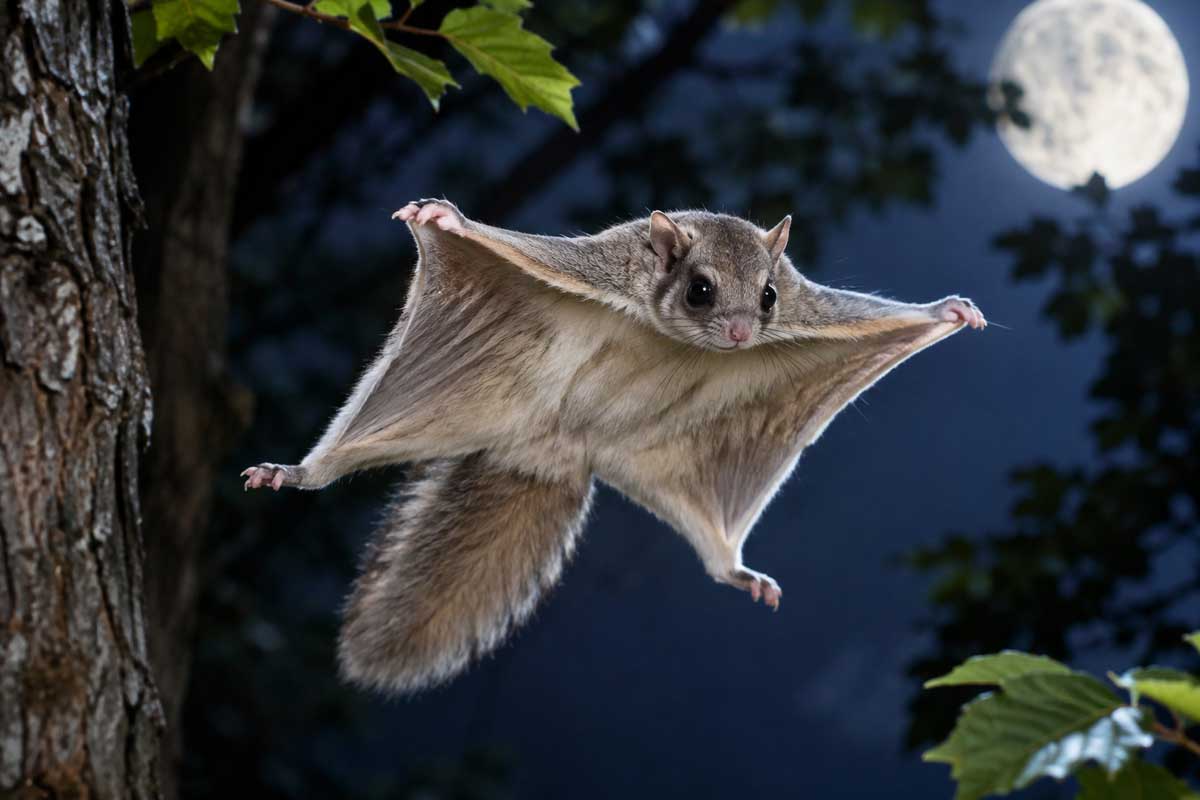
If the noise sounds like squirrels but happens at night, you may have a visitor most Ohioans have never seen. The southern flying squirrel is small, strictly nocturnal, and surprisingly common. A naturalist at Highbanks Metro Park in Delaware County notes that it is probably the most common squirrel species in Ohio.
Flying squirrels often live in small groups, and in winter several may share one nest. In an attic, that can mean scampering, sliding, and soft chirping noises in the middle of the night. They are especially common in homes near mature woods, which describes many neighborhoods in Delaware County, Worthington, and the wooded edges of Columbus.
Raccoons: Heavy Thumps, Dragging, and Chattering
There is no mistaking a raccoon once you know what to listen for. Raccoons are big animals, often 15 to 20 pounds or more, and they sound like it. Listen for heavy thumping and walking in the attic at night, sounds like something being dragged, and loud tearing or ripping at the roofline or soffits.
Raccoons also vocalize. Adults growl, hiss, and chatter. In spring, a nest of babies makes high-pitched chirping and whimpering sounds that some people mistake for birds. Raccoon mating season in Ohio begins in January and peaks in late winter. A female looking for a safe place to give birth often chooses an attic, so heavy noises this winter deserve quick attention.
Raccoon droppings can carry raccoon roundworm, and raccoons can tear through insulation and ductwork in a matter of days. See our page on raccoon removal in Columbus and our post on raccoons in the attic during breeding season.
What About Bats?
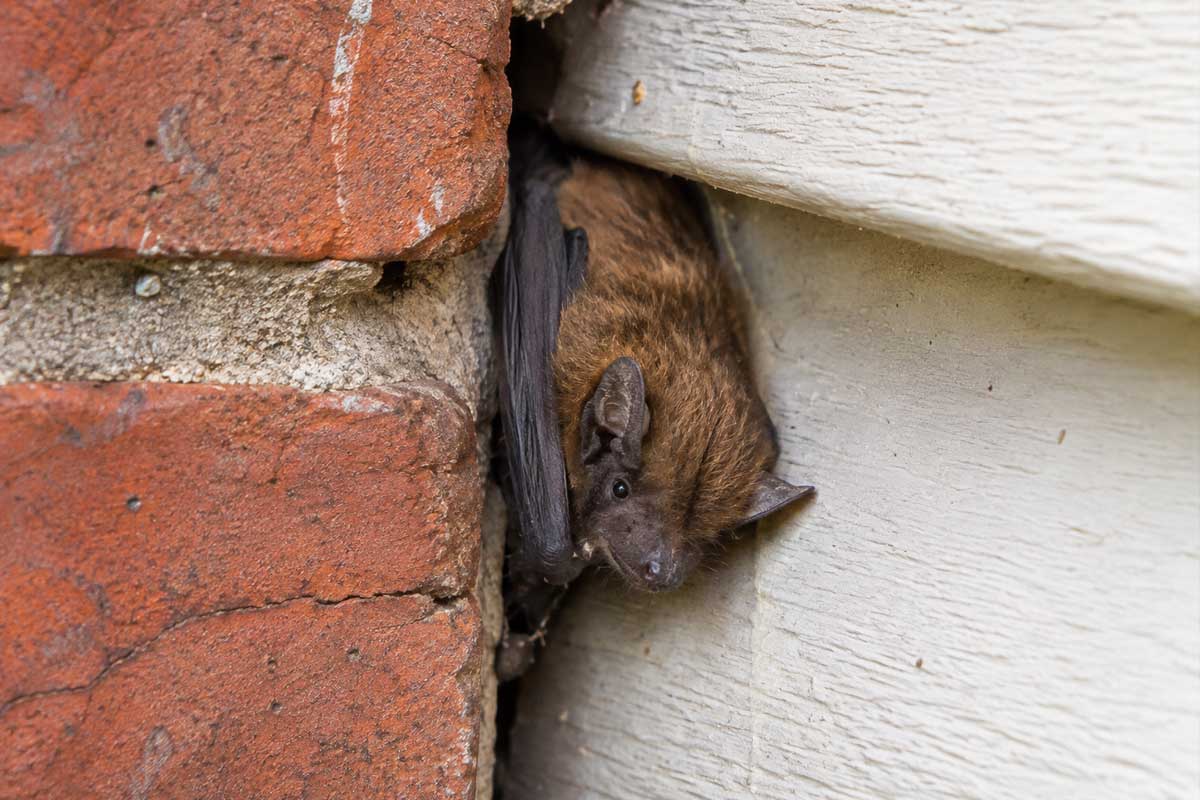
Bats are not usually the source of loud scratching, but they deserve a quick mention. A colony in a wall or attic can make faint rustling, scratching, and high-pitched chirping, mostly around dusk when the bats leave and again near dawn when they return. If the sounds line up with sunset and sunrise, step outside at dusk and watch the roofline. Learn more on our bat removal page.
Clues Beyond Sound: Droppings, Damage, and Smells
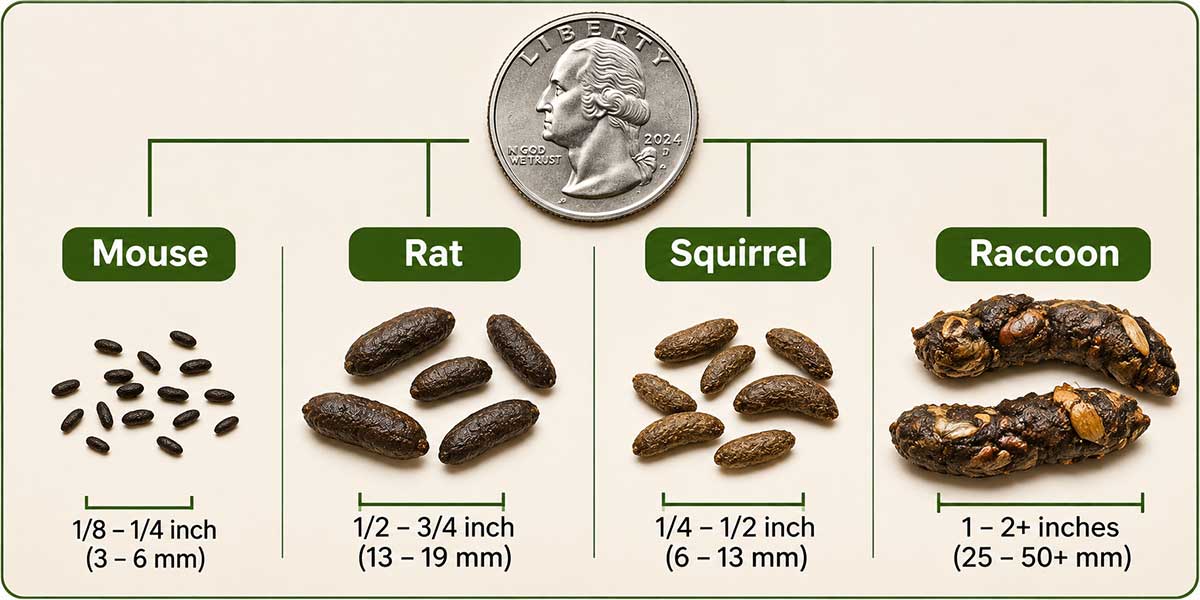
Sound narrows the list, and physical evidence usually confirms it. Mouse droppings are tiny, about the size of a grain of rice, with pointed ends. Rat droppings are larger, around half an inch to three-quarters of an inch, with blunt ends. Squirrel droppings look similar to rat droppings but tend to be scattered near the entry point. Raccoon droppings are much larger, often piled in one spot that serves as a latrine.
Check the outside of your home too. A ragged hole at the roofline or a torn vent cover points to raccoons. Neat, chewed holes at soffits and dormers point to squirrels. Grease marks along foundation gaps point to rats or mice. A strong urine odor, or a sudden foul smell from a wall, can mean an animal has died inside. That is a common result when animals get trapped.
Why You Shouldn’t Wait It Out
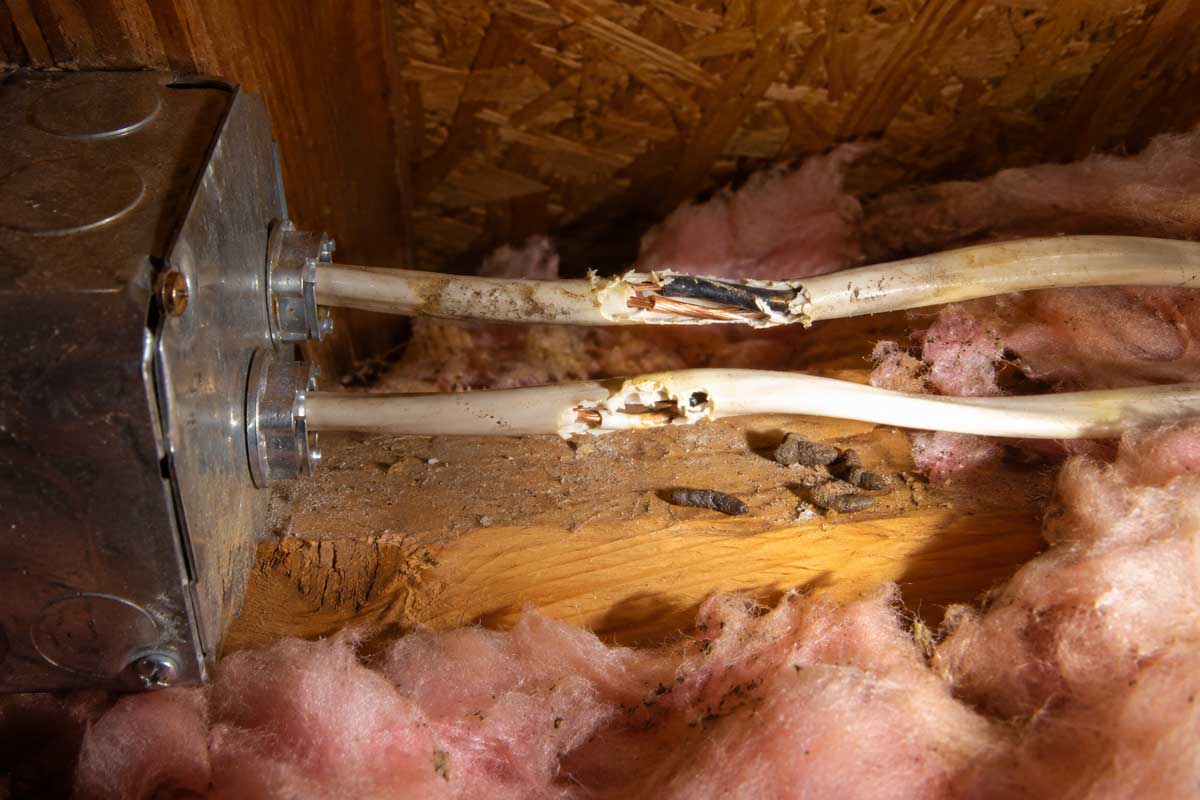
It is tempting to hope the noise will stop by itself. It rarely does. Rodents and squirrels chew wiring, which creates a real fire risk. Every species contaminates insulation with urine and droppings, which can lower its insulating value and raise your heating bills. Larger animals tear open roofs, vents, and ductwork.
There are health concerns as well. According to the Centers for Disease Control and Prevention, certain wild mice can shed hantavirus in their urine, droppings, and saliva. The CDC’s guidance on cleaning up after rodents advises against sweeping or vacuuming droppings dry. Our page on wildlife-related health risks covers these issues in more detail.
What Not to Do When You Hear Noises
The most common mistake is sealing an entry hole before you know whether an animal is still inside. Trapped animals panic. They chew new holes through drywall or ceilings, or they die inside the walls, and the odor can last for weeks. With raccoons and squirrels in late winter, sealing the hole can also trap babies inside.
Poison baits are another risk. A poisoned rodent often dies somewhere you cannot reach, and pets or other wildlife may eat the bait. Ohio also has rules about trapping and relocating nuisance wildlife. Raccoons, for example, generally cannot be released off the property where they were caught, under Ohio Administrative Code 1501:31-15-03. As licensed operators, we know these rules and handle bat removal legally and humanely.
How Buckeye Wildlife Solutions Finds the Source
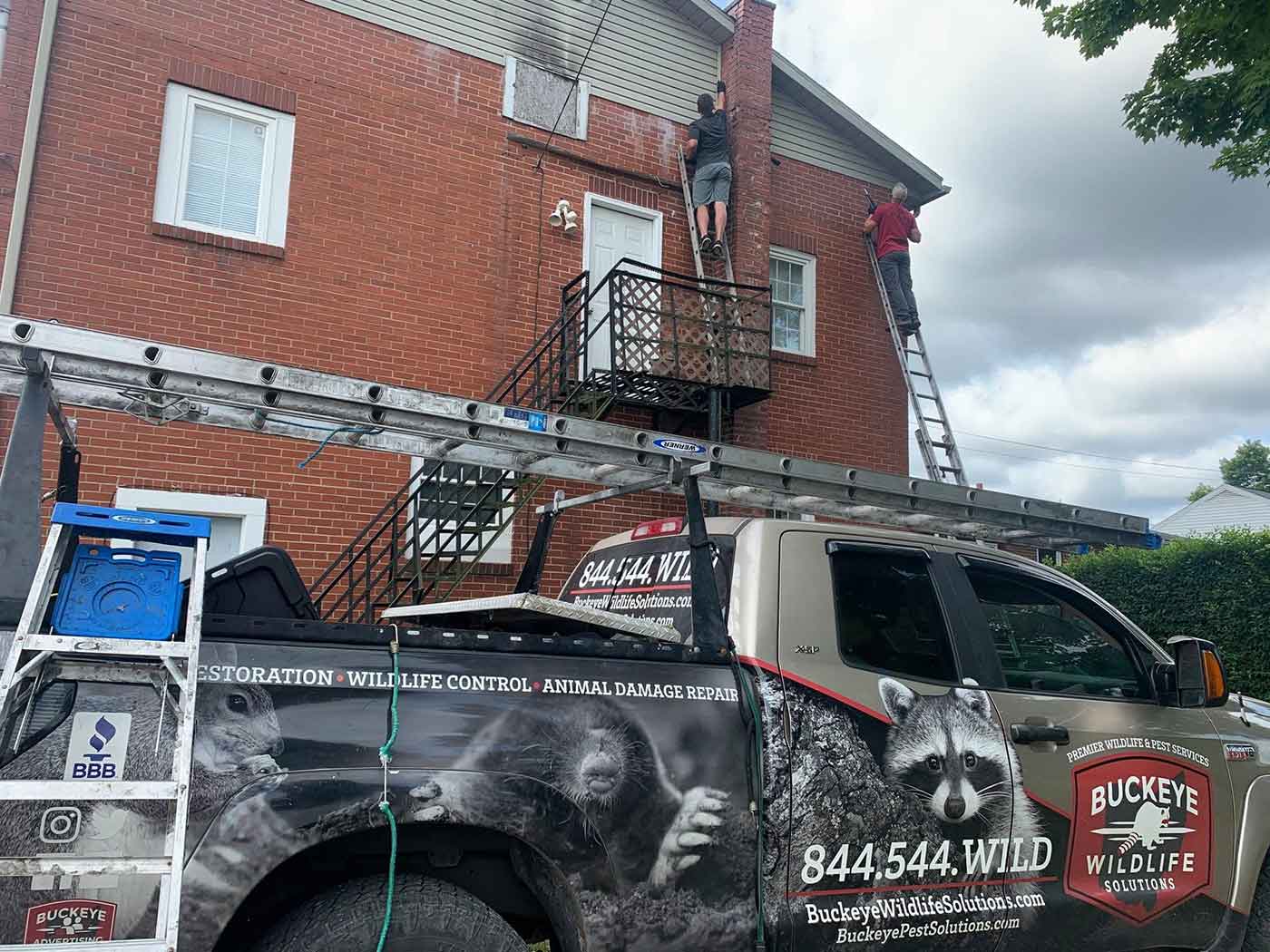
Our technicians combine what you have heard with a full inspection of your home. We check the roofline, vents, soffits, chimney, foundation, and attic for entry points, droppings, and nesting material. For hard-to-reach roofs, we use drone inspections . Thermal imaging can help locate animals hiding in walls without opening them up.
Once we know what we are dealing with, we remove the animals humanely and seal every entry point. When needed, we repair the damage they caused. That can include animal damage repairs to roofs and vents and full attic restoration with sanitizing and new insulation.
Hear Something Tonight? Call Buckeye Wildlife Solutions
Scratching in the walls at night is your home telling you something is wrong. The sooner you find the cause, the less damage there is to repair. Buckeye Wildlife Solutions serves homeowners throughout Columbus, Delaware, Powell, Lewis Center, Westerville, Dublin, and the rest of Central Ohio, with branches serving the Cleveland and Toledo areas.
Call Buckeye Wildlife Solutions at (844) 544-9453, text us at (419) 982-5502, or request a quote online. Tell us what you are hearing and when, and we will help you find out who is living in your walls.